
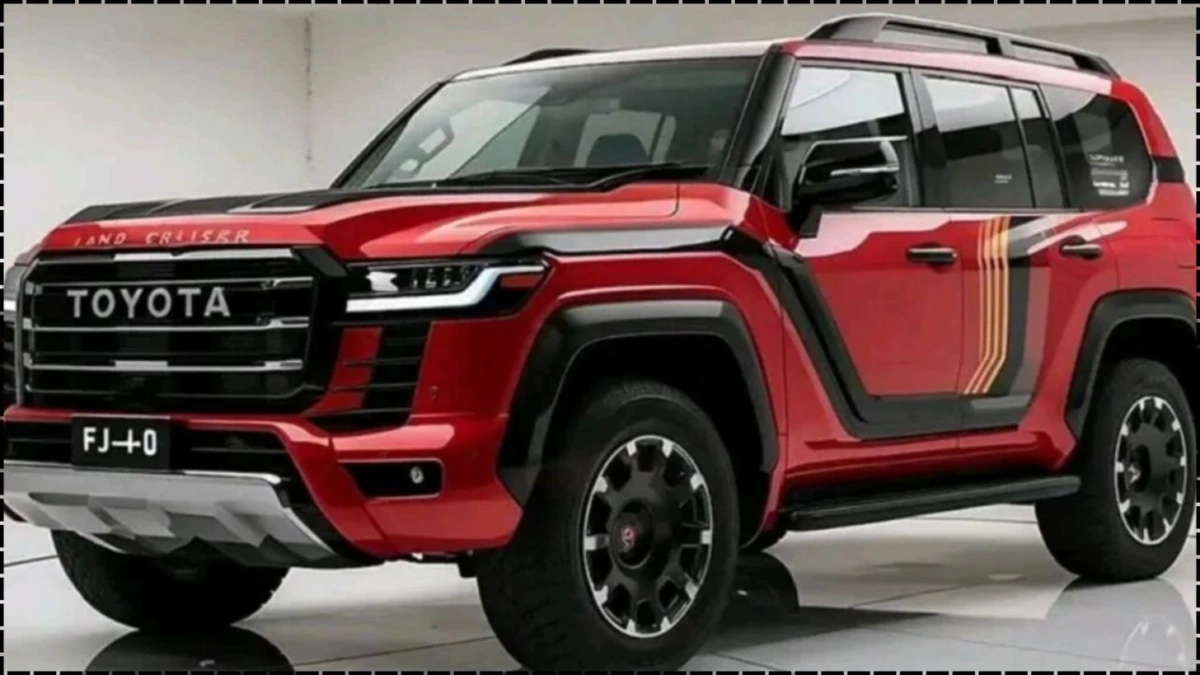
The anticipated Toyota FJ40 2025 Retro SUV Reborn has ignited significant international discussion, fueled by whispers of a surprisingly competitive pricing approach. Although Toyota hasn’t verified these details, experts suggest that bringing back this iconic off-roader could dramatically reshape the global SUV landscape, particularly impacting the Indian market.
The Toyota FJ40 2025 Retro SUV Reborn has become a key topic in the global automotive world following widespread online discussion about a possible price reduction. Even though Toyota Motor Corporation hasn’t officially confirmed the launch date or price point, speculation about resurrecting the classic FJ40 model has intrigued off-road fans, industry observers, and investors.
This speculation grew after several automotive websites and online communities shared concept images and suggested a lower-than-expected initial price. If this becomes reality, it could lead to a major change in the worldwide SUV market.
Table of Contents
- A Legacy That Redefined Off-Roading
- Why This Rumour Matters
- Pricing Speculation and Industry Reactions
- Design Philosophy: Balancing Retro and Modern
- Powertrain and Technology Expectations
- How India Fits Into Toyota’s Strategy
- Environmental and Regulatory Considerations
- Consumer Sentiment and Enthusiast Reactions
- Global Implications of a Potential Launch
- What Happens Next
- Conclusion
A Legacy That Redefined Off-Roading
The original Toyota FJ40 debuted in the early 1960s as part of Toyota’s Land Cruiser family. It quickly established itself as a vehicle with a tough design, dependable performance, and the ability to handle challenging terrain. It became a top choice for military, agricultural, and recreational purposes in Asia, Africa, and the Americas.
The model was produced for over two decades, with different versions adapted for specific regional needs. Despite being discontinued, its legendary status has remained strong, with restored FJ40s commanding high prices among collectors. Data from the International Federation of Historic Vehicles indicates that global interest in classic off-road vehicles has consistently grown over the past five years.
Automotive historian Meena Bhatia noted, “The FJ40 is more than just a vehicle; it represents a golden era of straightforward, robust, and capable machines. Reviving it, even in a modernized form, taps into a deep sense of nostalgia.”
Why This Rumour Matters
The potential revival of the Toyota FJ40 reflects broader trends in the automotive industry. In recent years, several automakers have successfully brought back classic models to cater to growing consumer demand for vehicles that blend vintage charm with modern technology. Ford’s reintroduction of the Bronco and Land Rover’s reimagining of the Defender both generated strong consumer interest and boosted brand recognition.
A report by Global Auto Insights indicates that demand for heritage-inspired vehicles has increased by 35% over the past three years, particularly among buyers aged 30 to 50, who value both design heritage and advanced features.
Toyota has traditionally used its Land Cruiser brand to attract customers who seek durability and reliability. Reviving the FJ40 would align with this strategy while expanding the company’s presence in the lifestyle-oriented off-road vehicle segment.
Pricing Speculation and Industry Reactions
Much of the excitement is based on online reports of a “dhamaka price,” suggesting that the FJ40 will be priced competitively against its rivals. While Toyota has not made any official statements, some analysts believe that a lower entry price could be a deliberate strategy to gain market share in developing economies.
Rajiv Menon, an automotive analyst at Motoring Intelligence, commented, “If Toyota relaunches the FJ40 at an affordable price, it could challenge established players such as the Jeep Wrangler and Ford Bronco. It has the potential to become a strong contender in markets like India, Southeast Asia, and Latin America.”
A Toyota spokesperson, in response to a Reuters inquiry, stated, “We are continuously exploring opportunities to expand our SUV lineup. However, no official announcements regarding an FJ40 revival have been made at this time.”
Design Philosophy: Balancing Retro and Modern
Unofficial images and concept drawings circulating online suggest that the Toyota FJ40 2025 Retro SUV Reborn might retain its classic boxy silhouette while incorporating modern features. Expected design updates include LED lighting, integrated digital displays, improved suspension systems, and enhanced safety technologies.
Dr. Arjun Kapoor, an automotive engineer and former Toyota consultant, explained, “The key challenge will be to maintain the original’s essence while meeting today’s standards for emissions, safety, and comfort. A hybrid or electric version would align well with Toyota’s global environmental goals.”
Toyota has already taken steps to electrify its SUV lineup. The Land Cruiser and Hilux have received mild-hybrid versions in several markets, which suggests a similar approach for any potential FJ40 variant.
Powertrain and Technology Expectations
Although specific details haven’t been confirmed, industry experts anticipate that the revived FJ40 will feature a hybrid petrol engine or even a fully electric drivetrain option. Toyota has invested significantly in its TNGA-F platform, which supports electrification and could form the basis for the new model.
Possible features could include:
- Advanced four-wheel-drive systems offering various terrain management settings.
- Regenerative braking and battery-assisted torque for enhanced off-road capabilities.
- Enhanced driver-assistance technologies, including adaptive cruise control and lane-keeping assist.
- A modular design enabling future electric upgrades.
In recent years, Toyota has also filed patents for modular off-road platforms and retro-inspired body designs, which experts believe could be related to this project.
How India Fits Into Toyota’s Strategy
India boasts one of the world’s most rapidly expanding SUV markets. Data from the Society of Indian Automobile Manufacturers (SIAM) reveals that SUV sales accounted for more than 55% of passenger vehicle sales in 2024. There’s a marked increase in demand for adventure-focused vehicles, particularly in the ₹30–50 lakh price range.
An affordable, rugged Toyota SUV could bridge the gap between premium off-roaders, such as the Jeep Wrangler, and locally manufactured SUVs, such as the Mahindra Thar. Automotive journalist Anita Raghavan observed, “If Toyota can offer local assembly and competitive pricing, the FJ40 has the potential to transform India’s SUV market significantly.”
Toyota already enjoys a robust presence in India through models such as the Innova, Fortuner, and Hyryder. Local assembly of the FJ40 could lead to reduced import tariffs and faster market adoption.
Environmental and Regulatory Considerations
Upon its launch, the FJ40 2025 Retro SUV would be subject to stricter emissions and safety standards than its predecessor. Many nations are prioritizing reduced carbon emissions, and automakers are responding accordingly.
Toyota has been steadily increasing its hybrid offerings to meet global climate targets. Introducing an electrified version of the FJ40 would help the company comply with upcoming regulations in key markets, including India’s Bharat Stage VII standards and Europe’s new emissions frameworks.
Environmental analyst Dr. Shalini Rao noted, “A hybrid or electric FJ40 could appeal to both environmental regulators and eco-conscious buyers, while still delivering on its off-road appeal.”
Consumer Sentiment and Enthusiast Reactions
Fan communities have been instrumental in driving excitement surrounding the vehicle. Online forums dedicated to classic Toyota models have seen thousands of posts discussing the vehicle’s potential design, price, and features.
Social media accounts sharing concept designs have garnered millions of views. Many users express hope that the new model will retain a manual transmission and traditional off-road characteristics, while offering modern-day reliability and comfort.
Raghav Nair, a long-time FJ40 owner from Bengaluru, shared, “I’ve been restoring my classic FJ40 for years. If Toyota produces something true to its original spirit at a reasonable price, it will be an immediate success.”
Global Implications of a Potential Launch
A successful relaunch of the Toyota FJ40 has the potential to reshape competition in the global off-road SUV market. The Ford Bronco, Land Rover Defender, and Jeep Wrangler have already demonstrated that retro-inspired models can generate robust sales. Toyota, with its established reputation and worldwide network, is well positioned to capitalize on this trend.
The company has a track record of successful market entries by combining heritage with modern engineering, as exemplified by the Land Cruiser Prado. The new FJ40 could follow a similar approach, offering rugged reliability combined with cutting-edge technology.
2025 Renault Kwid Electric with Fresh Styling and Extended Range: Introductory Offers Coming Soon
What Happens Next
Although an official launch date hasn’t been revealed, industry experts suggest that Toyota could unveil a concept model at a major international auto show within the next year. The Auto Expo 2026 in India and the Tokyo Motor Show are considered potential platforms.
It is also likely that Toyota would initiate teaser campaigns to slowly build anticipation. This has been a successful strategy for several brands in the past, like Ford and Land Rover.
Until official details are released, the excitement surrounding the Toyota FJ40 2025 Retro SUV Reborn emphasizes how a single model can evoke both nostalgia and anticipation for the future.
Conclusion
The speculation surrounding the Toyota FJ40 2025 Retro SUV Reborn combines strong historical appeal with modern market conditions. Its potential launch could influence design trends, pricing strategies, and environmental considerations across the SUV sector.